
Key Design Trends That Defined 2025
Defining trends are rarely single colors or single shapes—they are bundles of decisions that show up everywhere at once. In 2025, cat tree design kept converging on furniture logic: calm palettes, honest structure, and vertical systems families could place without apologizing to the room. Globlazer briefs across the year echoed the same requests—fewer loud shapes, more planted stability, more towers that survive the living room frame.
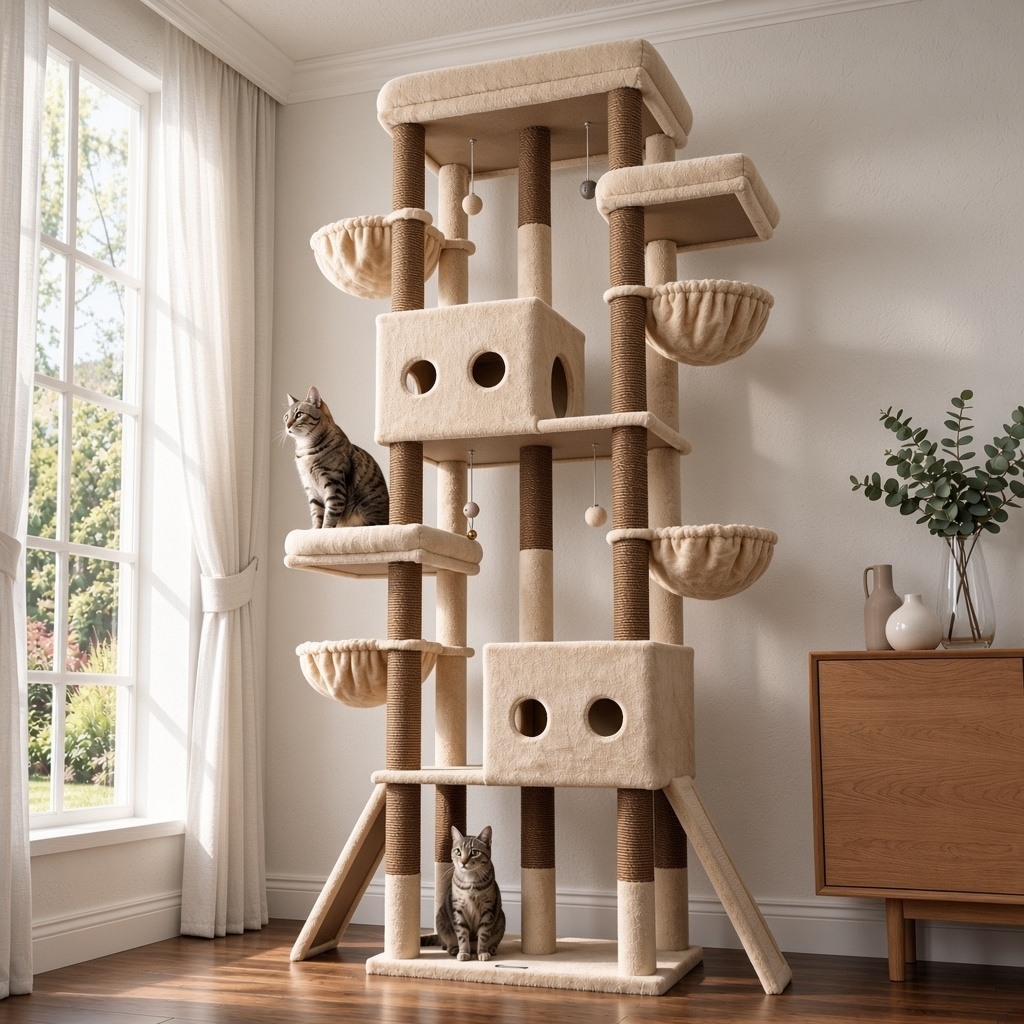
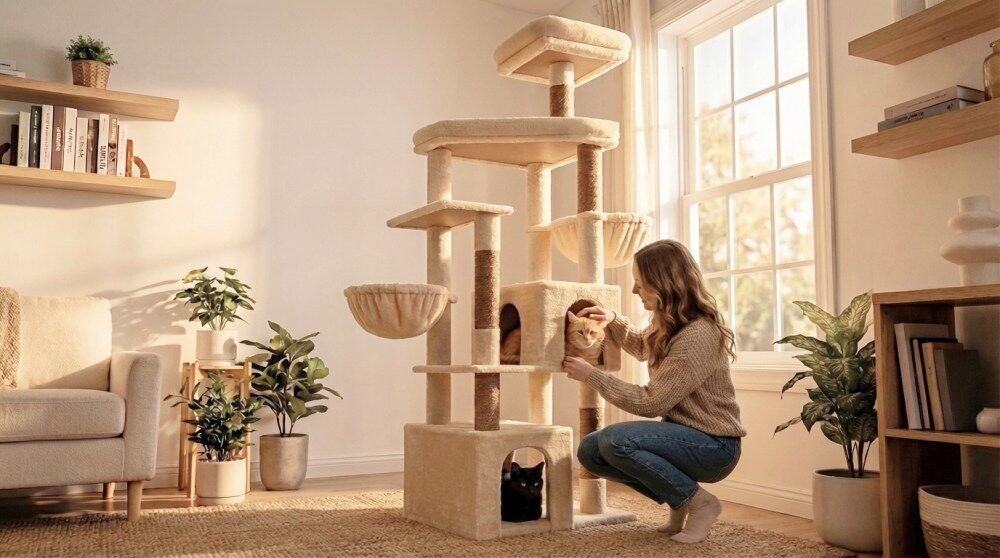
Soft minimalism went mainstream. Not empty minimalism—warm neutrals with texture inside a tight envelope. Platforms and posts that read quietly in daylight photography, sisal and plush chosen to feel intentional rather than costume. Shoppers compared towers to sofa swatches and rug piles; brands that answered with matte short-pile surfaces and controlled curves won the second glance.
Architectural language replaced novelty sculpture. Room-scale height with proportion discipline became the norm: posts related to ceiling lines, landings sized for pauses, structures that look like vertical furniture instead of a pile of pet shapes. Design media described homes moving toward warmer minimalism; the pet aisle followed with warmer beiges, softer greys, and silhouettes that respect sightlines.
Configurable modularity became expected. Buyers increasingly assumed towers could grow—add a landing, replace a scratch post, keep the silhouette calm while the household changed. That expectation shifted quality signals from “cute on day one” to “still composed after year two.” Retail programs favored neutral SKUs that could stack beside human furniture without color clashes that drive returns.
Stability became a visible design choice. Wide planted bases, thicker posts, and connectors engineered for reassembly moved from spec sheets into marketing photography. One-hand push tests on listing pages became shorthand for trust—because wobble is not only a safety issue; it is an aesthetic failure in open-plan rooms.
2025 did not invent those ideas—it normalized them. The category’s center of gravity moved from accessory novelty toward infrastructure thinking. At Globlazer, we read 2025 as confirmation: the market rewards towers that behave like specified furniture, not improvised pet corners. The trends that defined the year were really habits—proportion first, palette discipline second, modularity as insurance for how homes actually change.
Photography habits shifted in parallel. Listing galleries added detail frames—sisal close-ups, base footprints beside rug edges, mid-level landings with a cat pause implied by wear patterns. Shoppers stopped treating height as the only hero metric; they read stability and texture as proxies for whether a tower would still look composed after month six.
Color strategy consolidated around beige and soft grey envelopes because they lowered return friction and simplified merchandising across regions. Disciplined two-tone schemes let families add modules later without visual chaos—an expectation that modular programs reinforced from spring assortments through holiday resets.
Behind the trends, buyer literacy matured. More households arrived with renovation vocabulary—sightlines, matte surfaces, vertical rhythm—and expected pet verticals to answer in the same language. 2025’s defining trends were really a meeting point: rooms that warmed and softened, and a category that finally listened.
Globlazer lines that shipped through holiday resets proved the point—neutral towers beside human furniture in room sets outsold isolated hero renders in every channel we tracked.
Trade shows mirrored the same story. Booths that staged towers in living-room vignettes drew longer conversations than booths that stacked cartoon colors under fluorescent aisles. Buyers asked about connector families, neutral lot consistency, and whether a line could photograph beside linen without retouching.
Consumer language shifted too. Fewer shoppers asked “how tall is it?” as the only question; more asked whether a tower would still look calm beside a grey sectional after six months of claw traffic. That question is really about materials, modularity, and proportion—2025’s bundle.
By year end, those habits were no longer early-adopter quirks. They were the default brief.
New Arrivals
Fresh designs, new colors, and limited releases for modern cat homes.