
The Growing Role of Interior Aesthetics in Pet Products
When Maya refreshed her rental living room in Capitol Hill, Seattle, the last object she wanted to negotiate was the cat tree. Two indoor cats—one Maine Coon, one quieter tabby—one open-plan space, and a sofa she finally loved in mist grey. The old tower lived bright, bulky, and slightly wobbly behind a door she kept closed for photos.
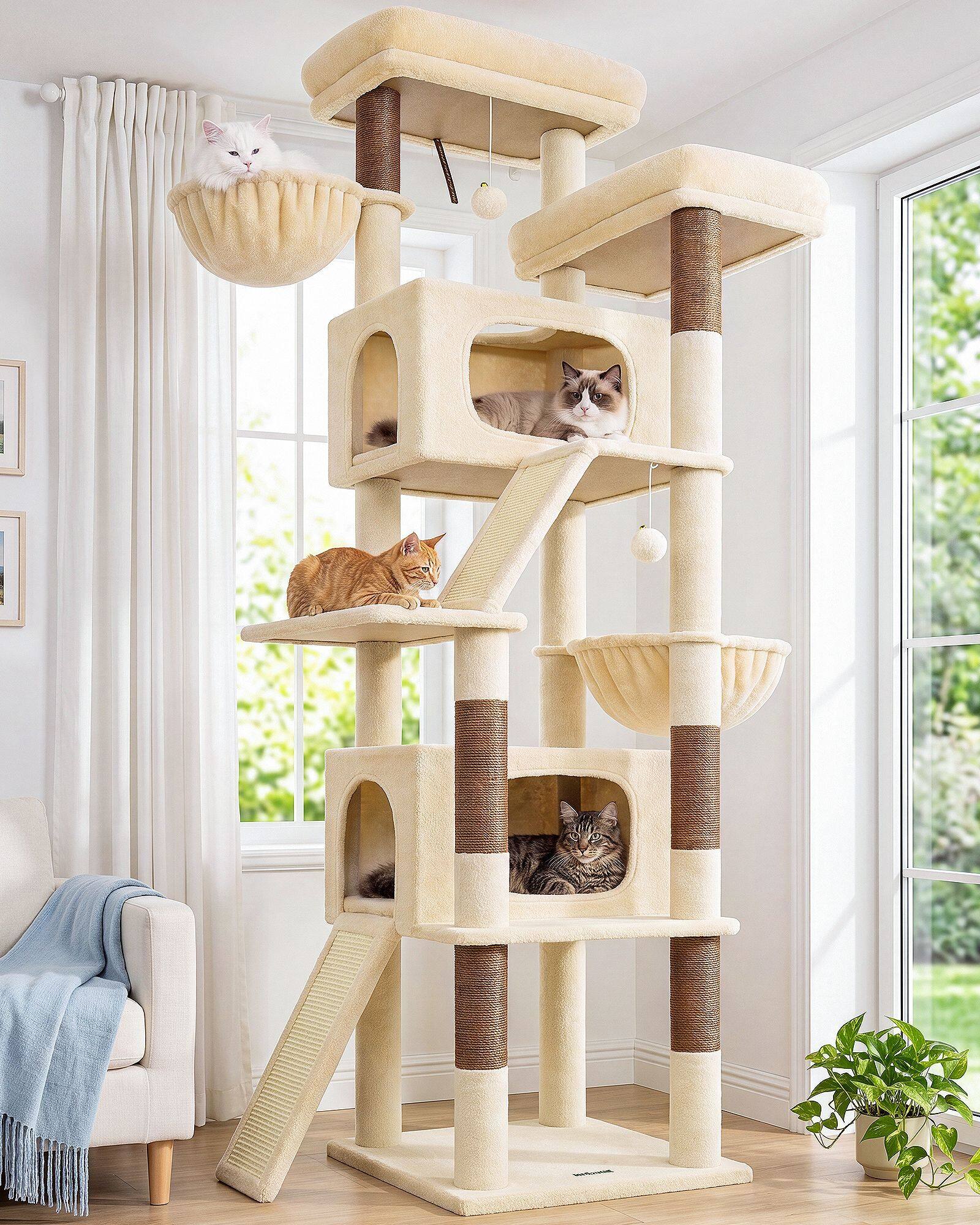
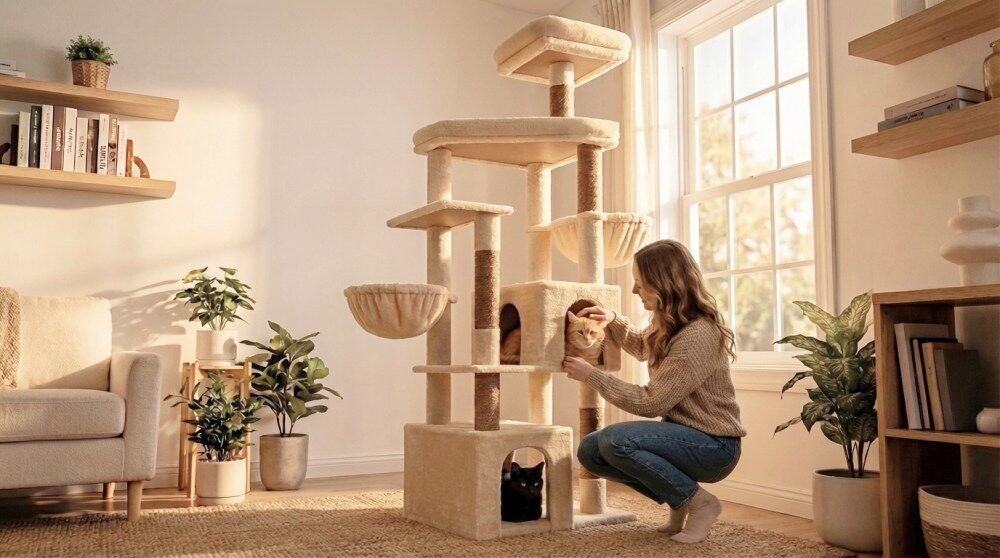
The shift started with a simple question: Would I put a side table here? If the answer was no, the cat furniture probably did not belong either. She measured height against the bookshelf, traced the afternoon sun on the window wall, and chose a tall neutral tower with wide mid-level landings. Placement beside the bookshelf, not in the hallway choke point, let the cats keep their window route while the room kept its calm.
Interior aesthetics did not mean sacrificing function for Instagram. It meant choosing surfaces that read matte in daylight, proportions that did not shout, and stability she could feel with one hand on the post. The Maine Coon stopped treating the top perch like shelf storage once the structure felt planted; the tabby claimed a mid-level pause that faced the kitchen sightline without blocking it.
That is the growing role of aesthetics in pet products: not vanity, but coexistence. When pets are central to daily life, their gear inherits the same standards as everything else in the frame—throws, rugs, lighting, the edited palette on the mood board. A tower that clashes reads like a compromise everyone tolerates until move-out day.
Maya’s experience mirrors what design-conscious renters describe across open-plan markets: pet verticals are no longer hidden infrastructure. They are part of how a room photographs, how guests circulate, how morning routines flow from kitchen to window. Globlazer hears the same language in feedback summaries—fits the room ranks beside cat actually uses it.
Weeks later, the tower reads like part of the apartment’s vertical layer. The cats use the climb line every morning; Maya stops thinking about where to hide the cat stuff. Interior aesthetics in pet products is really spatial honesty—structures honest enough to specify upfront, calm enough to stay when everything else in the room gets refreshed.
She noticed the difference in small rituals. Video calls no longer required angling the laptop away from a loud carpet tower. Friends who used to ask “where do you hide the cat stuff?” now ask which beige tone she matched to the rug. The Maine Coon naps on the top perch through afternoon meetings; the tabby uses the mid-level as a kitchen lookout without blocking the walkway.
Retail and design media describe the same shift at scale—pet gear judged by the same daylight test as throws and side tables. Globlazer hears it in briefs too: fewer requests for novelty shapes, more for towers that survive the living room frame. Aesthetics in pet products grew because coexistence became non-negotiable in open-plan life.
When the tower finally matched the rug and the bookshelf, Maya stopped treating pet gear as a separate shopping category. It was simply part of the room she already cared about.
New Arrivals
Fresh designs, new colors, and limited releases for modern cat homes.