
Comparing Plush Fabrics for Look, Touch, and Everyday Use
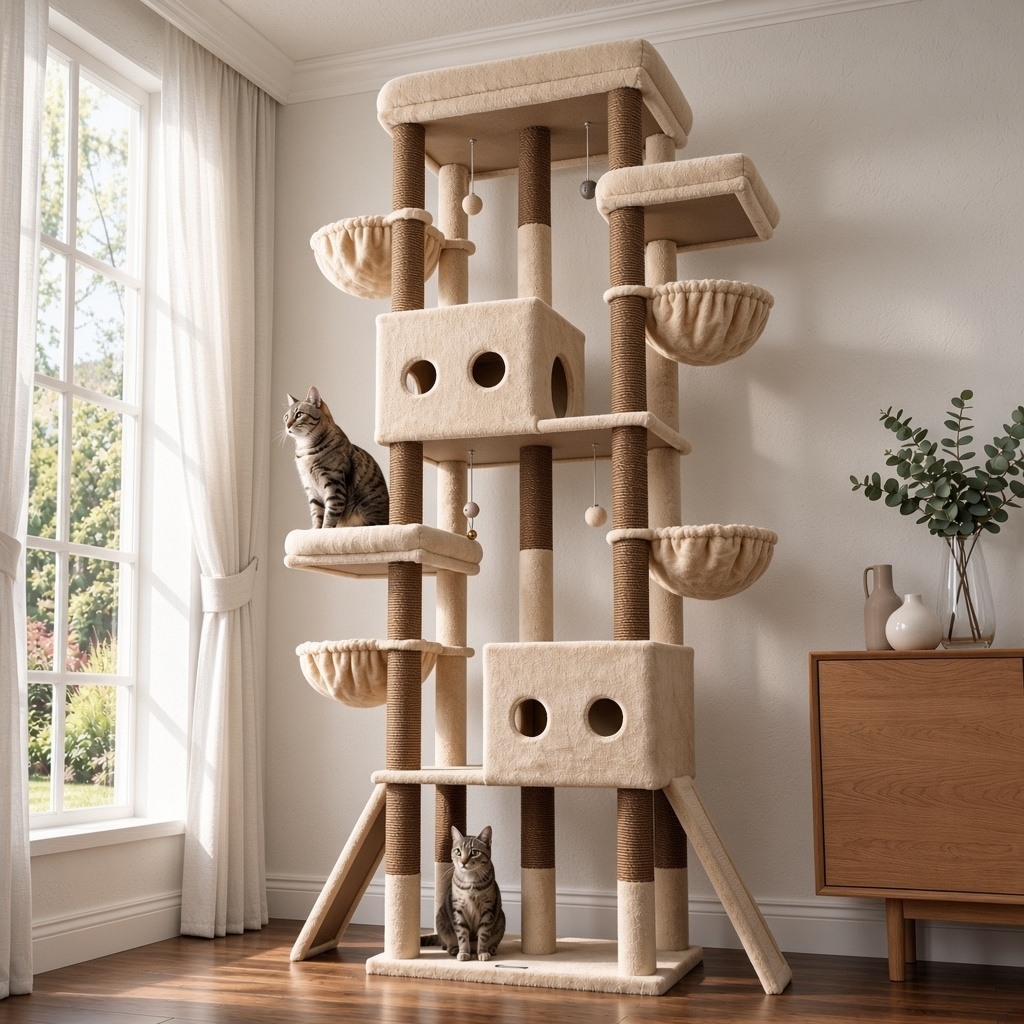
Plush is not one decision. It is three conversations happening at once: how a platform looks across the room, how it feels under a paw, and how it behaves after ordinary Tuesday life. When we compare fabrics for Globlazer cat trees, we are not hunting for the softest swatch on the table. We are balancing appearance, touch, and recovery after vacuuming, napping, and the repeated climbs that turn a new tower into part of the room’s daily rhythm.
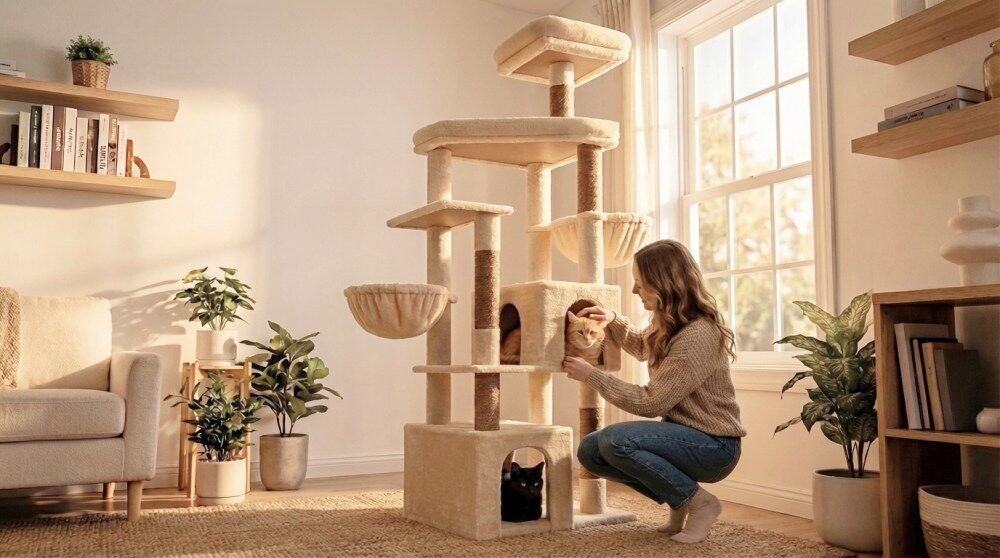
That comparison belongs in design, not in a lab report. Samples arrive stacked on a table; the real question is what happens when afternoon light crosses a living room and a grey platform has to sit calmly beside upholstery that was chosen years earlier. Some piles photograph beautifully yet read shiny or overly fuzzy under window light. Others look flat in hand yet settle into a quiet matte beside a sofa. For home-facing cat furniture, the winning fabric is often the one that still looks intentional from ten feet away—not only in a close detail shot.
Cats respond to density and direction more than humans respond to adjectives. A surface that feels luxurious to a hand can flatten too quickly under shoulder weight at a platform corner, where traffic is always highest. We lay swatches beside one another and ask different questions than a generic softness scale would allow. Does the pile rebound after compression? Does the direction of the nap invite a chin rest or fight it? Does the fabric still welcome a slow blink after weeks of use, when the tower is no longer novel but still central?
Touch and structure are linked. Plush wraps platforms that must forgive launches without looking battered. A fabric that bruises visually after one busy weekend ages the whole cat tree faster than owners expect. We favor materials that recover their shape and their calm color field together, so a beige or grey perch continues to read as furniture rather than as worn novelty carpet.
Everyday recovery is the third leg of the comparison. Cleaning changes the story. Fibers that trap dust visibly age faster; surfaces that resist matting keep a tower looking newer long after assembly day. Owners experience plush as a daily signal of quality when they walk past the tower on the way to coffee, not as a showroom detail they admired once. That is why our palette work—cream, beige, grey, and the restrained dark greys that anchor taller structures—pairs with pile choices that survive ordinary maintenance without demanding special treatment.
We also compare how plush interacts with sisal and with the neutral posts that frame many Globlazer silhouettes. A platform fabric that shouts against woven column texture breaks the furniture illusion. The best combinations let sisal read as intentional contrast while plush reads as upholstery continuity: soft where the body rests, honest where claws need resistance.
By treating plush as a system—look, touch, recovery—we avoid choosing materials that win a sample review and lose the living room. The best fabric for a cat tree is the one that still feels considered after the first month, when claws have found their preferred routes and the household has stopped noticing the tower only because it has started belonging. That is the standard we return to whenever a new season asks for refreshed textures: not louder plush, but more honest plush—materials that respect modern cat furniture as part of the home, not as a pet accessory parked in a corner.
New Arrivals
Fresh designs, new colors, and limited releases for modern cat homes.