
Soft Minimalism and the Future of Pet Interiors
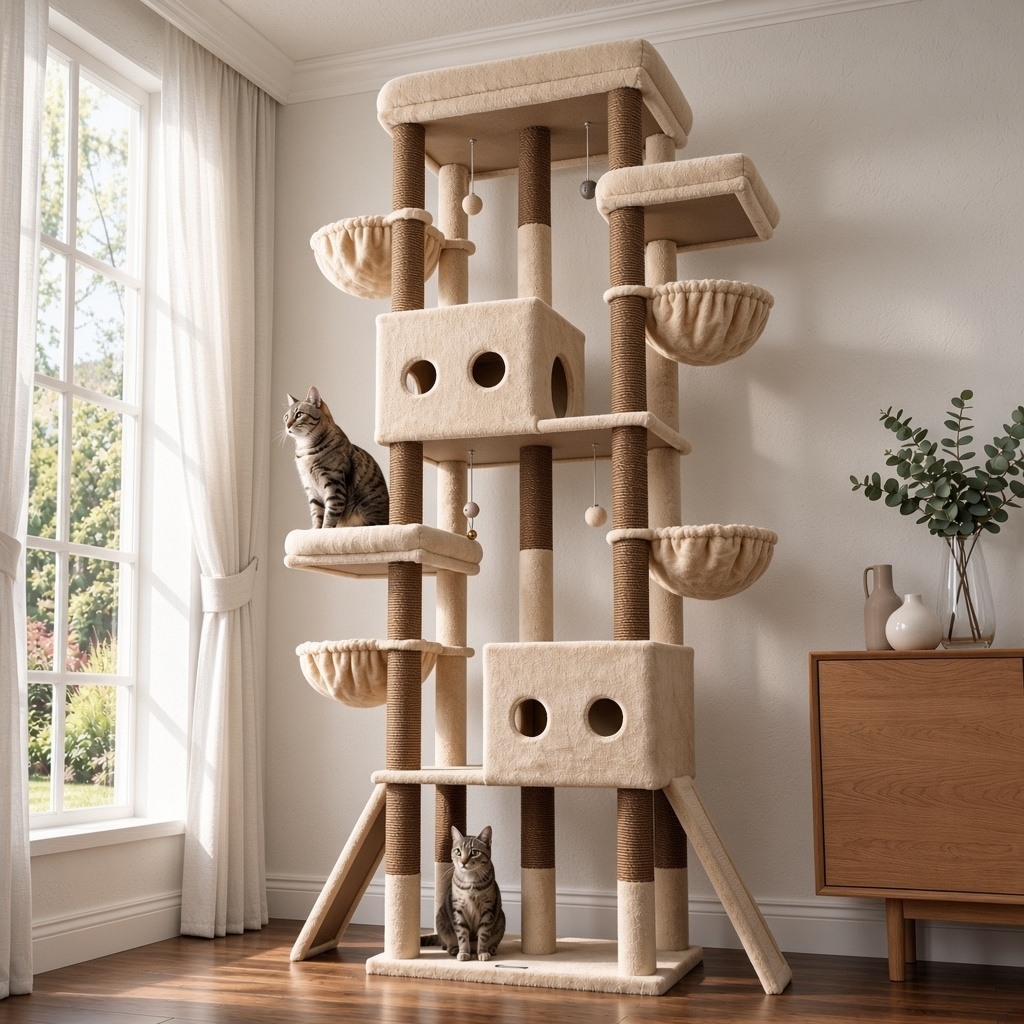
Soft minimalism in pet interiors is no longer a preview—it is the baseline. Walk through any recent living room photo set and the pattern is familiar: fewer objects, calmer palettes, materials chosen to survive years instead of seasons. The question for the years ahead is not whether beige and grey towers belong in main rooms. It is what happens after neutral becomes default.
We see the next phase as texture inside the neutral envelope. Slightly denser plush that still reads matte in daylight. Warmer greys that do not flip cold beside oak. Sisal with visible weave, wood tones aligned with flooring, finishes that age with dignity rather than embarrassment. The future is not a new color shouting for attention. It is the same quiet frame with more honest detail inside it.
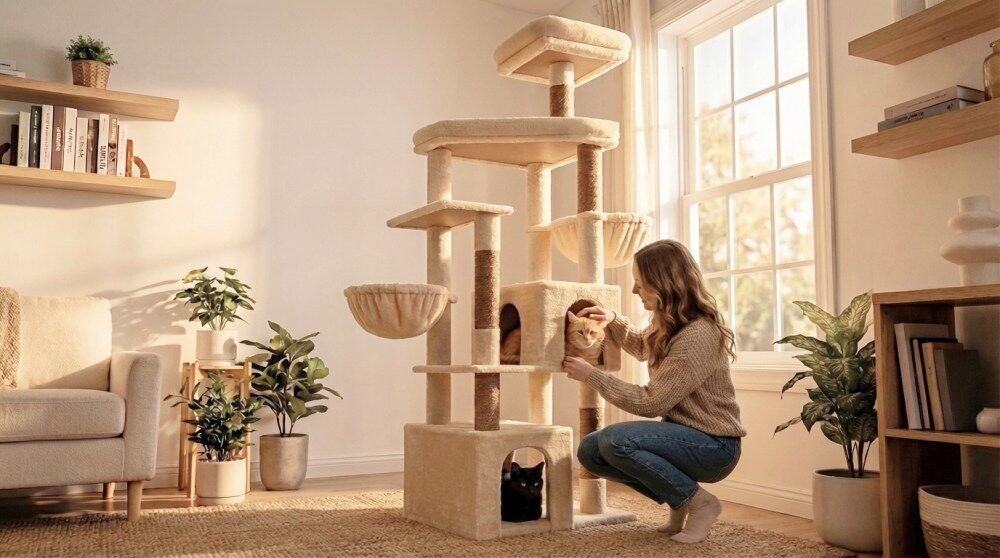
Future pet interiors also mean fewer objects with higher material bars. Households that already own a calm cat tree are less interested in a second novelty piece than in one vertical object that survives redesigns. That changes how brands plan assortments. Instead of endless novelty silhouettes, the long-term bet is on structure you can keep when the sofa changes, the rug changes, or the wall color moves one shade warmer.
Lighting and sightlines are joining the brief in ways pet products rarely acknowledged before. Pet furniture is starting to be planned like lamps: where daylight hits platforms, whether a tower blocks a window path, how evening light reads on matte fabric. A neutral cat tree that looks perfect in a flash photo can still feel harsh under a single ceiling fixture at nine o’clock. Soft minimalism pushes designers to think about the whole day, not only the hero shot.
Behavior has not gone minimal—cats still want height, scratch zones, and places to watch the room from above. Soft minimalism edits the ornament around those needs, not the needs themselves. Rounded platform corners instead of sharp novelty edges. Edited perch counts instead of every feature the mold could fit. Sisal placed along real climb paths instead of wrapped for visual noise. The tower whispers; the cat still gets to shout from the top platform.
We also expect coexistence to matter more than gadgets. Connected feeders and cameras may find their place, but the through-line in pet interiors is permanence: objects that feel quiet, material-honest, and willing to stay in the room after the novelty wears off. That is especially true in smaller homes, where one large vertical piece must earn its footprint every day.
Globlazer’s direction stays inside that future. Edited silhouettes across our cat tree lines, stability engineering that does not change when the palette calms down, neutrals as infrastructure with seasonal texture variations on top. Beige, dark grey, and light grey remain the spine because they let households redesign around the tower instead of replacing it every time taste shifts.
Soft minimalism matured in residential design years ago. Pet interiors are catching up to what living rooms already expect, and the gap between pet product and room object keeps narrowing. The future belongs to cat furniture that feels like part of the home’s long conversation—not a guest that arrives in a bright box and never quite learns the house rules.
That future will not arrive as a single hero color or a single silhouette season. It will arrive as better defaults: quieter towers in more homes, materials chosen for how they live beside human furniture, and cat trees that still feel right after the first enthusiastic week gives way to ordinary Tuesdays. Soft minimalism is maturing from taste into infrastructure—and pet interiors are finally keeping pace with what living rooms already expect.
New Arrivals
Fresh designs, new colors, and limited releases for modern cat homes.