
Exploring Sustainable Wood Material Options
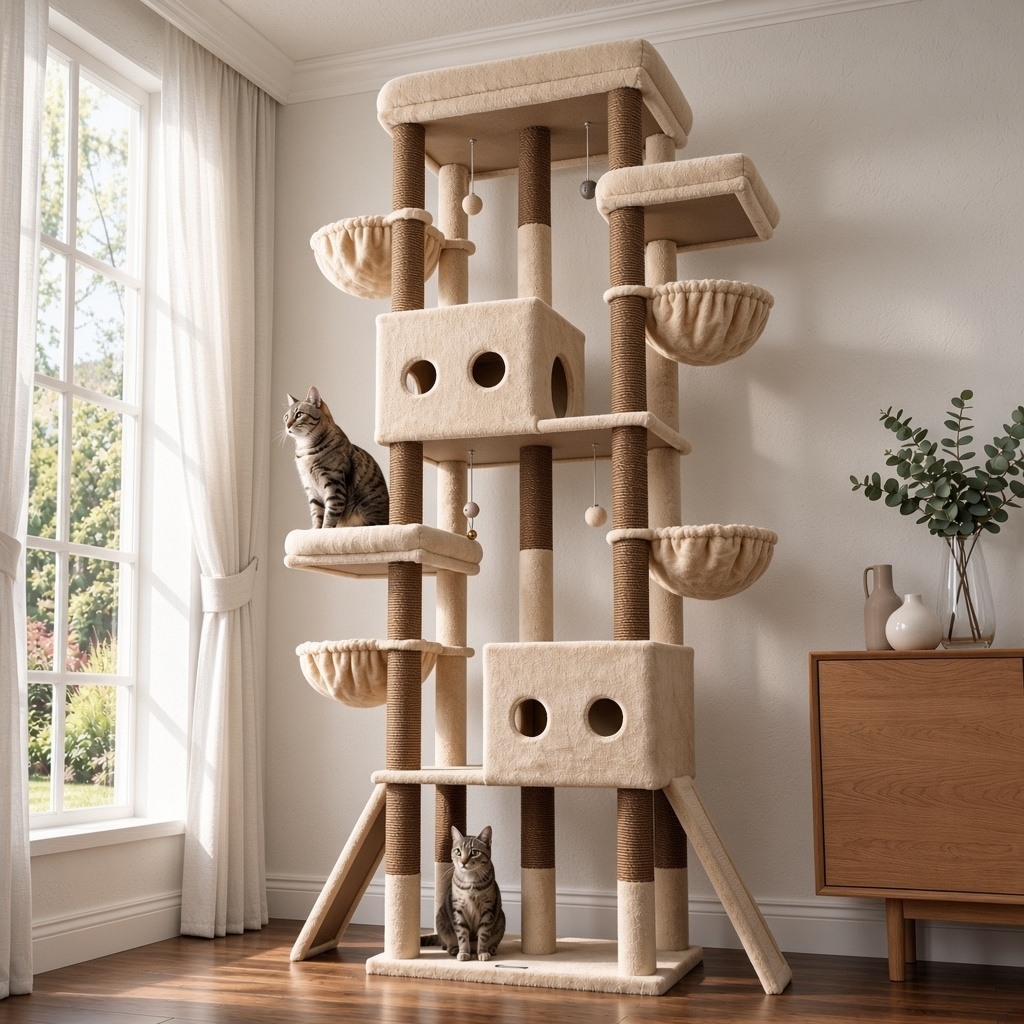
Wood on a cat tree is never just decoration. It is structure owners touch during assembly, and surface cats investigate when sisal is busy elsewhere. That is why Globlazer is exploring sustainable wood material options for select posts and accents—not as a marketing sticker, but as a design decision that has to survive ordinary living rooms for years.
The conversation started with a simple owner question: does this material look honest beside neutral plush, and will it still look that way after unpacking, assembly, and the first season of indoor light? Sustainable sourcing is part of the answer, but so is grain behavior, edge durability near platform joints, and how tone reads under daylight rather than showroom spots alone.
Our product team compares incoming samples the way we compare fabric hand-feel—by living with them for a while. We note odor after boxes open in a real apartment, how edges behave where hardware meets posts, and whether a warm wood accent supports the BG, DG, and LG systems instead of fighting them. A novelty stain that photographs well but clashes with a beige sofa fails the brief, even if the lumber certificate looks perfect on paper.
FSC-aligned supply is one lane we are evaluating: chain-of-custody paperwork matters for retail partners and for owners who ask where materials come from. We are also reviewing adhesive systems with lower VOC profiles so assembly day does not become a chemistry lesson in a small bedroom. These are slow filters, not single pass/fail gates—because a responsible wood story has to match how towers are actually built, shipped, and tightened at home.
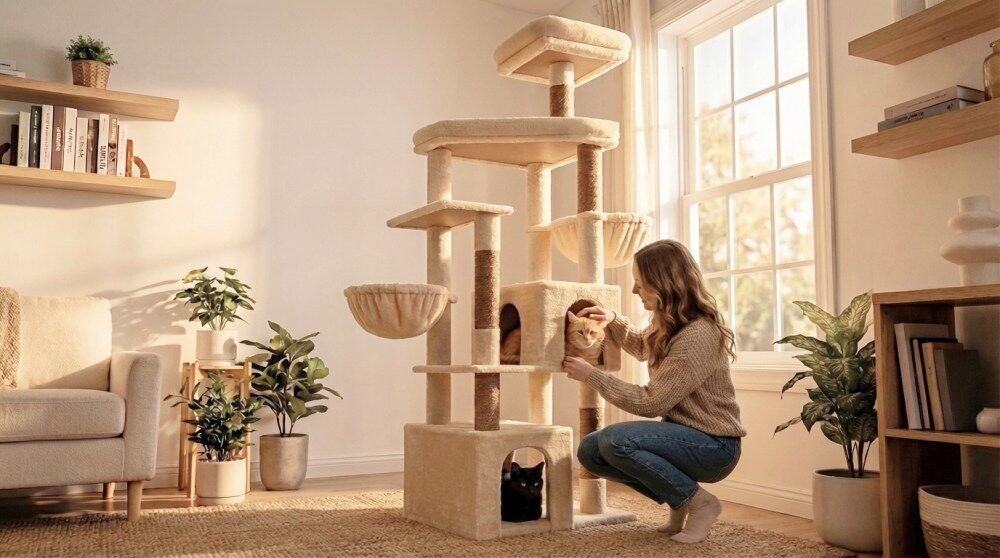
Nothing in this exploration changes our neutral palette narrative. Wood appears as warmth inside existing color systems—not as a dramatic contrast finish that turns the cat tree into a statement piece you have to decorate around. The goal is quiet integration: posts that feel architectural, touches that reward the hand, surfaces that age with dignity rather than looking tired after one winter of dry heat.
We have rejected plenty along the way. Samples that looked too orange under LED, boards that sang loudly when claws found an edge, batches that could not repeat the same tone for a second production run. Sustainable language is easy to print; repeatable material behavior is the harder work. That is the R&D rhythm here—sample, live with it, send it back, try the next lane.
When a wood option earns a place in a production collection, we will say so plainly. Until then, this is design iteration in public: documenting how we weigh environmental responsibility against the owner-facing question every post must answer—does this belong in my living room, and will my cat trust it?
We are also listening to assembly feedback from our own team and from owners who tighten hardware on a Sunday afternoon. If a post feels sharp, looks uneven beside plush, or demands special care language, it does not graduate—no matter how strong the sustainability story reads in a slide deck.
Cat trees stay in homes longer than most furniture trends. Choosing wood carefully is one way we plan for that timeline—not a lab report, but a craft log about materials that deserve to remain visible.
New Arrivals
Fresh designs, new colors, and limited releases for modern cat homes.