
Why Vertical Territory Matters in Multi-Cat Homes
Elena’s two cats—Miso and Pepper—share a one-bedroom in Portland. They also share a personality neither will admit: neither believes the other should own the same square of sunlight.
On the floor, that disagreement looked like stalking. One cat would sit in the kitchen doorway while the other ate. A slow tail flick, a stare held a beat too long, then a sprint that ended nowhere useful. Multi-cat friction rarely announces itself as a fight. It arrives as micro-stares at the water bowl, blocked hallways, and two bodies trying to own the warm patch where afternoon light meets the rug.
The fix was not more bowls or more beds. It was vertical territory—separate heights, separate sightlines, separate routes through the same room.
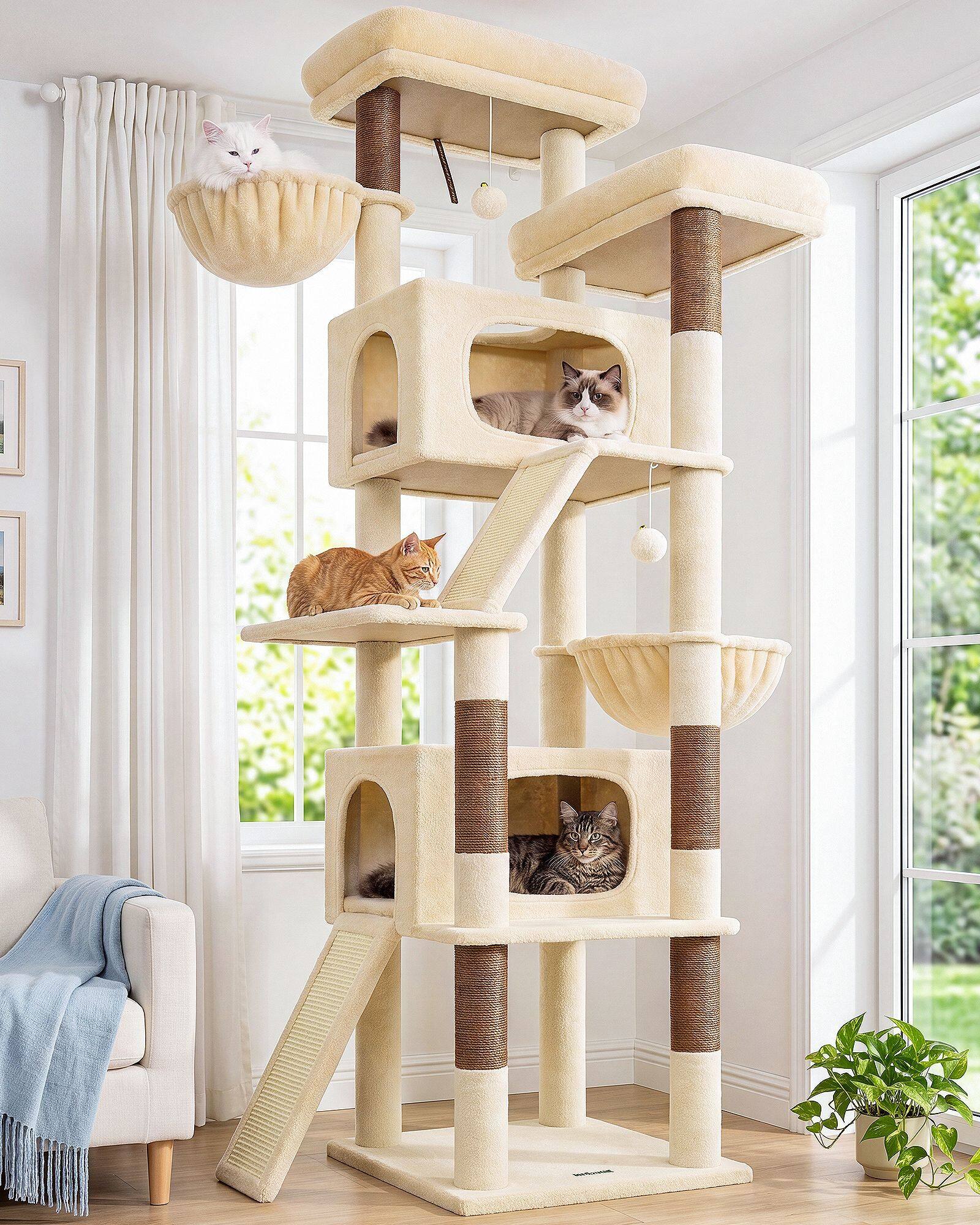
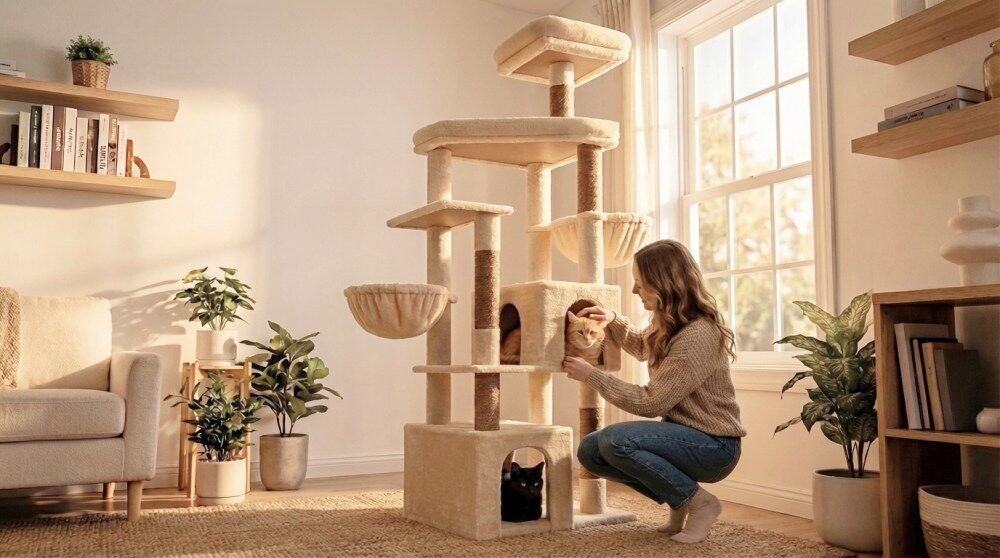
Elena placed a tall Globlazer cat tree beside the window. Within a day Pepper claimed the top perch: birds, delivery trucks, the neighbor’s blinds—an observation deck with rank. Miso, who prefers enclosed middles and less open exposure, took the third platform and the tunnel-like space between posts, close enough to radiator warmth, far enough from Pepper’s airspace overhead. The platforms were staggered enough that neither cat had to share the exact same landing to coexist in the same sightline.
Morning routines shifted first. Pepper descended for breakfast while Miso remained on the middle deck, watching the kitchen from above instead of blocking the doorway. The floor route between bowl and litter became a corridor again, not a negotiation zone. That is what behavior guides describe in quieter language: cats establish territory in three dimensions. When vertical resources are scarce, ground resources become battlegrounds. When vertical resources are generous and staggered, cats negotiate with routes instead of ambushes.
Afternoon brought a second lesson in spacing. Both cats wanted the sun band that moved across the living room as the day aged. On the floor that was one prize. In height it became two: Pepper on the top near the glass, Miso on a mid-level deck angled toward the sofa back—parallel warmth without a shared perch. Sisal columns sat on separate approach lines so scratching sessions did not turn into face-to-face standoffs at the same post.
Evening added the room’s vertical dimension that floor furniture cannot offer. Pepper used the upper route as a bypass when Miso lounged on the rug. Miso used the middle platform as a safe pause when Pepper charged through on a phantom hunt. Neither cat needed to win the apartment on carpet. Height gave them parallel lives in one lease.
Vertical territory is not more furniture stacked for show. It is spacing—platforms far enough apart that two bodies can coexist without sharing one perch; sisal placed so two scratch rhythms do not become a duel; routes that let one cat pass above while another rests below without the slow hallway stare.
Elena still hears the occasional thump at dusk when Pepper misjudges a leap in play mode. But the room feels larger because the cats use height the way the apartment cannot offer on floor alone. The kitchen doorway conflict faded because neither cat needed ground level to prove rank each evening.
In multi-cat homes across compact floor plans, vertical territory works as peace infrastructure—not a luxury tower, but permission for two cats to share one room without sharing the same square of air. A Globlazer structure earns that permission when staggered decks, planted bases, and neutral surfaces turn the living room into a three-dimensional map each cat can read at their own altitude.
New Arrivals
Fresh designs, new colors, and limited releases for modern cat homes.