
Why More Cat Owners Are Choosing Neutral Colors
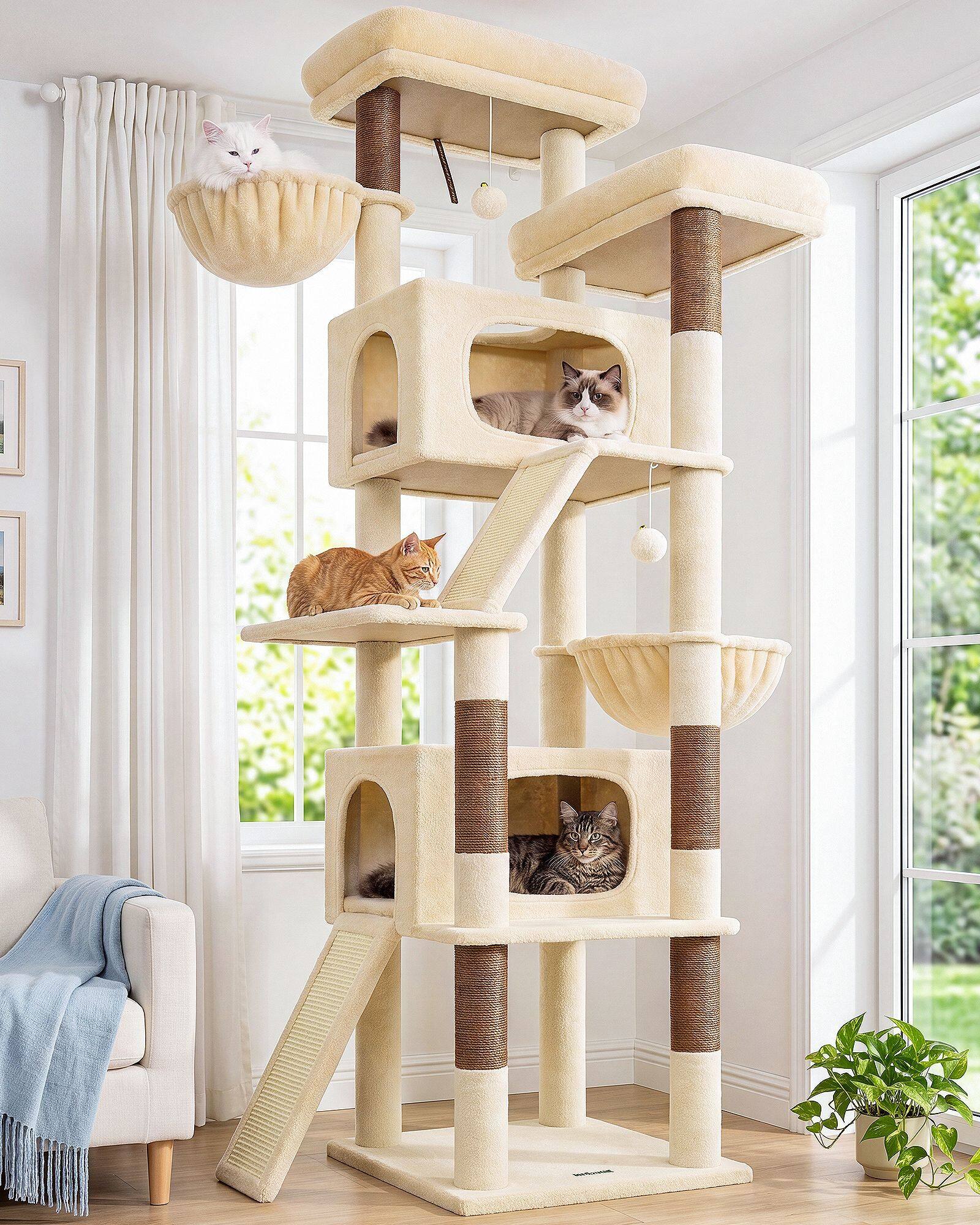
Color used to be how cat trees signaled “pet product” from across the room—bright carpet, high contrast, patterns that never appeared on a human sofa. In 2023, more owners are doing the opposite: choosing neutral cat tree finishes that borrow the same logic as their walls, floors, and upholstery.
Design media often describe grey and beige as versatile finishes that travel across modern and transitional homes. Cat trees are finally following that logic instead of fighting it.
Low visual noise, high compatibility
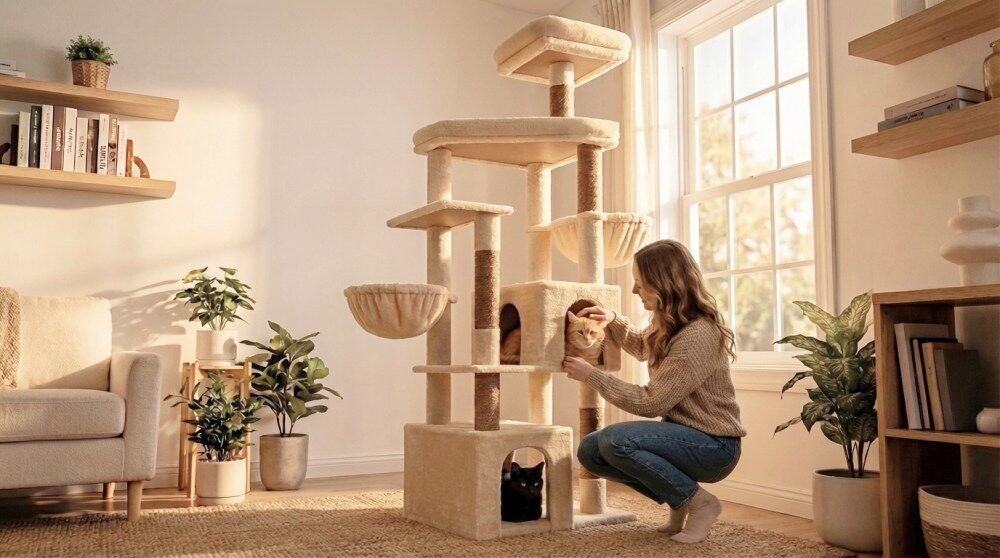
Open-plan apartments punish loud objects. A saturated tower competes with art, textiles, and daylight. Neutral surfaces—warm beige, soft grey, light grey—let the structure stay present for the cat without dominating sightlines for humans.
That matters because pet products are increasingly part of decorating decisions, not afterthoughts ordered at midnight. Owners ask whether a tower can live beside a linen sectional, not whether they need a spare room to hide it.
Photography accelerated the shift. Lifestyle frames reward products that survive daylight beside real upholstery. A neutral cat tree photographs across seasons—summer linen, winter throws—without looking dated when the room palette stays calm.
Texture carries interest when color stays quiet. Plush platforms, sisal columns, and woven accents still feel distinct under paws even when the palette whispers. Neutral is not flat; it is disciplined.
What Globlazer builds around
Our core palette reflects that shift: Beige, Dark Grey, and Light Grey are not accidents of manufacturing. They are the tones we expect to see beside oak floors, white trim, and the grey upholstery common in North American rentals.
Neutral does not mean boring for cats. Texture still varies—plush platforms, sisal columns, woven accents—so scratching and resting feel distinct even when color stays calm.
Retail assortments mirror the same story. Chains that once leaned on novelty hues now reset aisles with towers that can sit beside throw pillows in lookbooks. Buyers learned that loud pet colors age poorly in open displays; calm palettes survive markdown seasons.
At Globlazer, neutral color is a design commitment, not a default when brighter fabric is out of stock. We choose beige and grey families that match across heights and modular lines so a household can add vertical territory without introducing a second color argument in the living room.
Secondhand market photos tell the same story. Resale listings that show a neutral tower beside real sofas move faster than listings where the cat furniture dominates the frame. Color calm signals room-fit before a buyer reads dimensions.
Lighting shifts how neutrals read. Warm bulbs pull beige toward cream; north-facing rooms favor grey families that do not turn muddy. We sample platforms under daylight and evening lamps because a cat tree lives in both.
Owners who once bought bright towers for kittens often replace them when the living room matures—not because the cat outgrew function, but because the palette outgrew the room. Neutral choices stretch that replacement cycle.
Wall color trends cycle faster than cat furniture should. Greige walls, white oak, and charcoal upholstery dominated North American rentals through 2023; neutral towers tracked that palette without chasing micro-trends. A Globlazer cat tree in beige or grey is meant to survive the next paint refresh, not fight it.
Pattern avoidance is part of the same discipline. Printed carpet on traditional trees aged like dated wallpaper. Solid neutrals let texture—sisal, plush, weave—carry interest without becoming a motif the room must coordinate around.
Maintenance matters, too. Neutral surfaces show wear honestly; owners who prefer calm palettes also prefer materials that clean without bleaching the story. That pairing keeps neutral towers looking intentional years in.
The trend is not about making cat trees disappear. It is about letting them belong—visually quiet, structurally serious, and ready for rooms where people actually live.
New Arrivals
Fresh designs, new colors, and limited releases for modern cat homes.