
Compact Cat Trees for Smaller Living Spaces
Mara’s Portland one-bedroom measures generosity in inches, not spare rooms. The desk, dining table, and sofa share one continuous sightline from the entry. When she adopted a young tabby named Finch, the first question was not whether she loved him—it was where his energy could go without turning the floor plan into an obstacle course.
Finch did what apartment cats often do: he claimed vertical real estate. Window sills, chair backs, the top of a bookshelf. Mara did not need a lecture on enrichment; she needed a footprint she could live with.
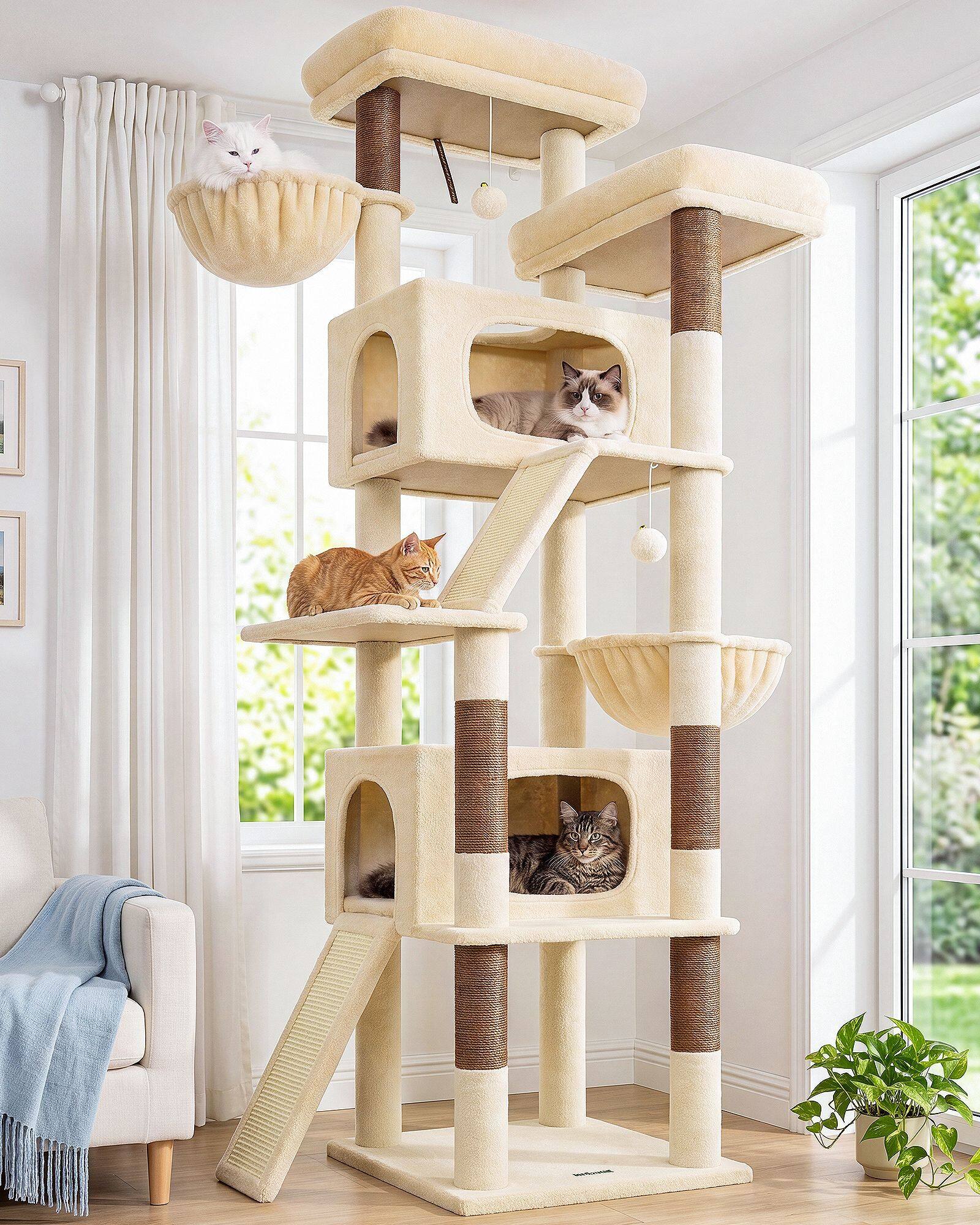
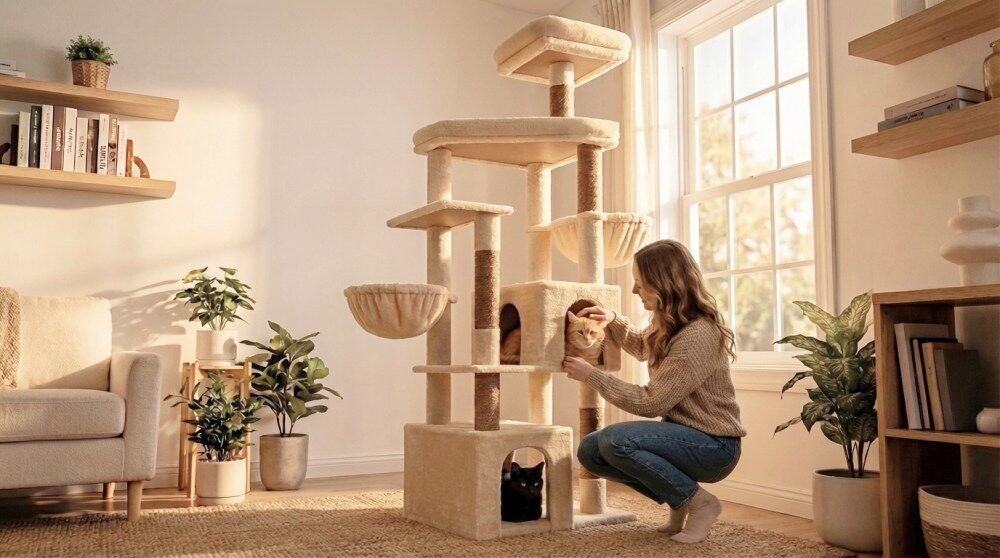
She chose a slim tower that climbed instead of spreading—tall enough to add routes, narrow enough to slide into the gap between the bookshelf and the living-room window. The neutral finish mattered as much as the size. In a rental with grey walls and oak laminate, a loud pet accessory would have felt like a daily visual argument.
Within a week, Finch’s path became predictable: scratch on the sisal near the entry, sprint up two levels, settle on the mid perch to watch the street, then disappear into the top rest for a late nap. Mara kept her walkway clear. The tower earned its square inches vertically, not horizontally.
Compact living does not mean giving cats less. It means designing enrichment that respects the same lines humans walk every day—kitchen to desk, desk to sofa, sofa to bed. A well-placed cat tree for a small apartment can add three levels of cat territory without asking the room to grow.
Mara’s building is older Portland stock: tall windows, shallow closets, one real corner for a tower. She measured twice—not only floor width, but door swing and radiator clearance. The winning footprint was the one that respected those fixed lines while still giving Finch a full climb column.
Finch’s morning routine became the apartment’s metronome. Sisal at the entry caught his first stretch after breakfast; the mid perch aligned with the street tree where crows argued; the top rest caught afternoon heat rising along the window glass. Mara could work at the desk without stepping around a sprawling condo of platforms.
Neighbors noticed the calm before they noticed the cat furniture. Beige upholstery on the tower matched the rental’s grey-oak story instead of interrupting it. That mattered when Mara hosted friends in the same room where Finch’s routes lived.
Globlazer towers in slim profiles are built for that negotiation: vertical territory in footprints that behave like furniture, not like a second sofa. Finch still sprints the column after dinner; Mara still walks a straight line to the kitchen. That is the trade they found: less floor, more height, and a home that still feels like theirs.
When Mara considered a second perch option—a wide horizontal condo—she measured the same walkway and put it back in the cart archive. The slim tower won because it respected the apartment’s only straight line. Compact cat tree design is often a story about lines humans refuse to cross.
Finch still uses the bookshelf top on busy evenings when the tower is occupied by sun. Mara did not need two structures—she needed one column that made the bookshelf less tempting. Vertical enrichment and restraint can coexist in the same square feet.
New Arrivals
Fresh designs, new colors, and limited releases for modern cat homes.