
How Pet Furniture Became a Lifestyle Category
There was an aisle logic that kept pet products separate from the rest of home shopping: bright packaging, utility corners, and the assumption that nobody would photograph a litter box next to a dining table. Cat tree design broke that aisle first—not because cats became fashionable, but because pet households started spending aesthetic attention the same way they spend it on sofas, rugs, and lighting.
Humanization is the quiet engine. When pets are family members in daily language, their gear inherits the same intolerance for ugliness. A tower that clashes with a neutral living room feels like a compromise; a furniture-style tower feels like an intentional choice. Retail and social feeds reinforced the shift: lifestyle photography rewards products that survive daylight and open shelving, not only utility shots on laundry-room tile.
When the living room becomes the benchmark
Category research describes cat furniture gaining decorative and emotional attributes—designer collaborations, modular forms, materials chosen for touch as well as claw. Globlazer sees the operational version: briefs that ask for Instagram-ready not as vanity, but as proof a SKU belongs in the same mood board as throw blankets.
That reclassification changes failure modes. A lifestyle category judges returns with room-fit language—too loud, too toy-like, wrong proportion—not only cat did not use it. Brands that still write for cage-side utility miss how purchase decisions are made: Can I live with this in the frame I already curated?
Upgrade cycles slowed in disposable pet toys but accelerated in room-scale pieces. A family that reupholstered the sofa is more willing to replace a tower that suddenly reads orange and fuzzy in a grey room. Pet furniture became a lifestyle category when durability expectations matched decor expectations—five years of climbs, five years of looking correct beside the bookshelf.
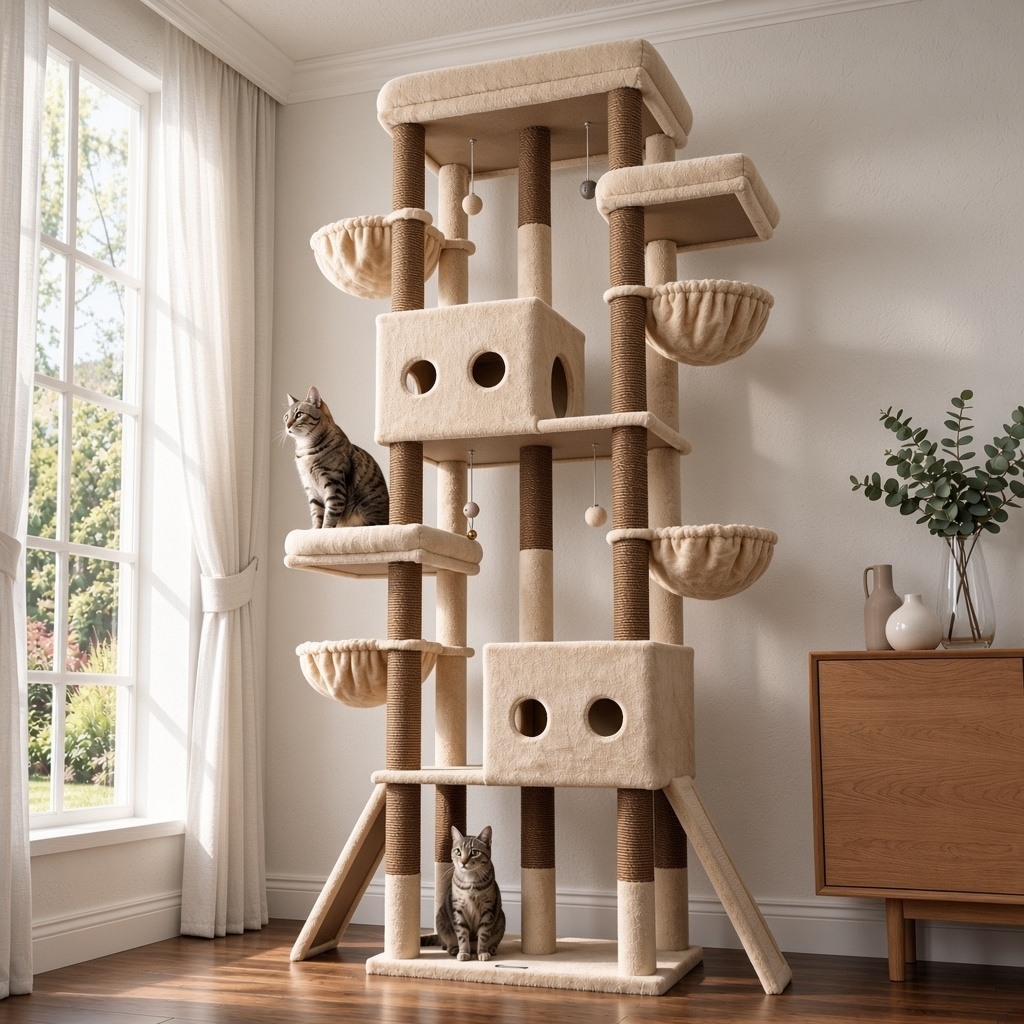
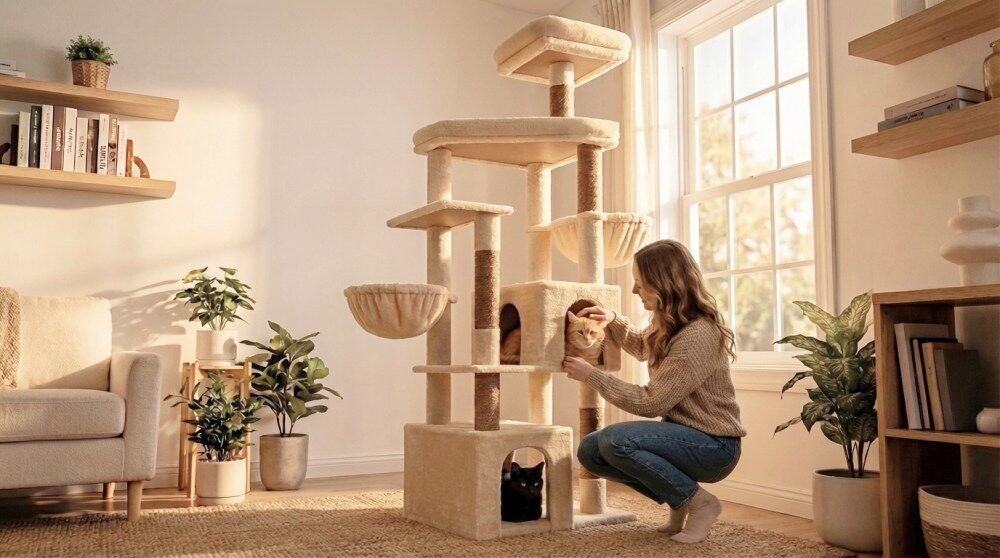
The next wave is not more novelty. It is calmer structures that respect vertical behavior while earning shelf space beside human decor. Open-plan apartments and suburban living rooms converge on the same ask: a tall neutral cat tree that completes the room instead of apologizing in the corner.
Manufacturers who speak the old language—bright colors, gimmick shapes, utility-only copy—still ship volume, but the narrative energy moved. Lifestyle pet furniture is the category where design discipline and cat behavior share one brief. The question stopped being where do we hide this and started being which tower belongs in the photo we already planned to take.
Merchandising followed the mood board. Chains that used to segregate pet aisles now place neutral towers beside accent chairs in seasonal lookbooks. The cat tree is not the punchline; it is the vertical element that balances a low sectional in the frame.
Price architecture shifted with perception. Lifestyle shoppers accept room-scale towers at furniture-adjacent price bands when materials read upholstery-grade and silhouettes survive three decor seasons. Compact novelty posts compete on impulse; lifestyle pieces compete on whether the room still feels edited.
Globlazer briefs increasingly ask for calm platforms that photograph beside ceramics and woven baskets—not cat toys scattered at the base. That is the operational definition of lifestyle: pet gear judged by the same finish logic as the coffee table book stack.
The aisle label still says pet, but the purchase trigger moved to living room. Globlazer towers are specified beside sofa depth and window height now—not only ceiling clearance in a spare bedroom. That is lifestyle category behavior in the field.
Calm structures win the next shelf reset: tall, neutral, wide enough for real climbs, quiet enough for open-plan photos. Novelty had its cycle; infrastructure aesthetics is the longer one.
The lifestyle shift is complete when the cat tree is specified like a chair—not hidden like a litter box.
New Arrivals
Fresh designs, new colors, and limited releases for modern cat homes.