
The Global Shift Toward Minimalist Pet Living
Minimalist pet living is not a single aesthetic export. It is a shared editing instinct showing up with different accents—in North American open plans, European compact rentals, and Japanese rooms where every centimeter already has a job. What unites them is simple: families want fewer pet objects, higher standards, and cat tree silhouettes that survive the same photograph as the sofa.
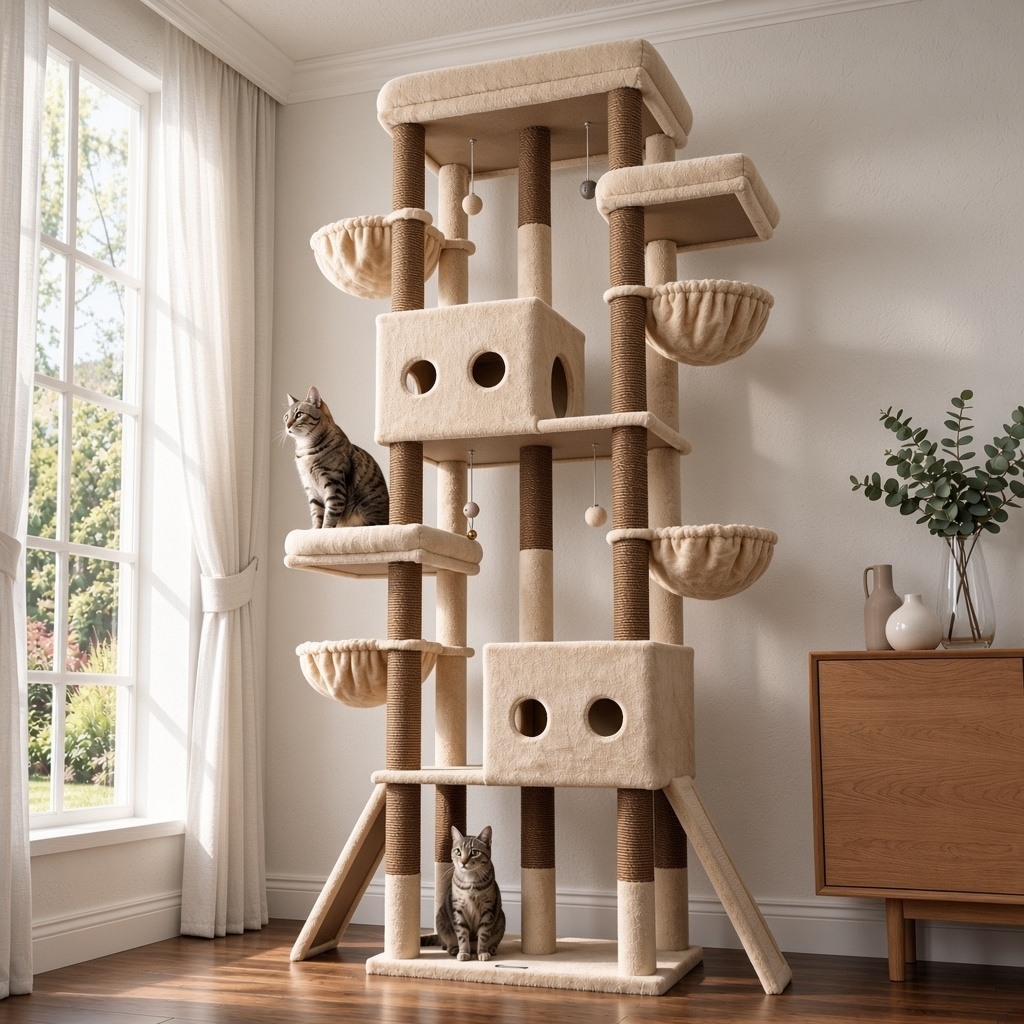
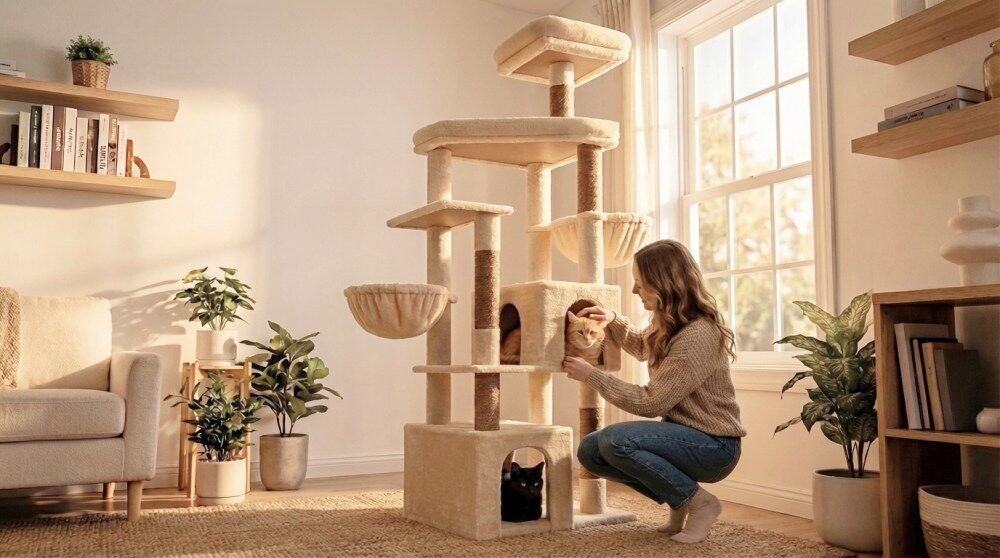
In North America, the shift often begins when a household stops treating the pet corner as a separate country. Open kitchens and living rooms share one sightline, so a bright scratch post beside a neutral sectional reads as noise immediately. The minimalist answer is not deprivation—it is one edited vertical system: a tall neutral tower with honest sisal, wide enough mid-level pauses for real climbs, planted enough to stay in the frame when guests arrive. Industry Updates observation describes the pattern as fewer, better—one calm object replacing a pile of mismatched pet shapes.
Europe brings a different pressure: fixed paint, smaller footprints, and a low tolerance for materials that smell or shine like impulse buys. Renters compare platforms to upholstery swatches and ask about off-gassing because the tower will sit near seating for years, not weekends. Matte beiges and soft greys win not as trends but as inventory logic—surfaces that look specified on day one and still feel adult beside oak floors. Compact flats reward slim vertical lines: height without turning the walkway into an obstacle course.
Japan compresses the lesson further. Storage-first layouts and low furniture keep sightlines open; pet verticals must contribute enrichment without visual shouting. The preference is for one slender tower that can move when the room changes—vertical territory with a footprint disciplined enough to tuck beside cabinetry, not block it. Minimalism here is functional: fewer objects, clearer routes, materials that read woven rather than plastic.
Despite regional differences, three habits repeat globally. First, pet gear is planned like furniture—measured against windows, bookshelves, and circulation paths. Second, neutral palettes became the default bridge between human decor and cat behavior; beige and soft grey are not boring, they are conflict reduction. Third, material honesty replaced novelty sculpture—sisal that looks like sisal, platforms that read upholstery-grade, structures calm enough to stay when throws and rugs refresh.
Retail and design media accelerate the translation. Room-context photography outperforms isolated pet-aisle hero shots because shoppers decide with interior literacy now. A tower that clashes fails in the first scroll; a tower that shares the palette reads like infrastructure. Globlazer briefs across markets echo the same requests—planted bases, edited silhouettes, modular thinking for households that will add a cat or move apartments before they replace the sofa.
Minimalist pet living will keep spreading because cohabitation became non-negotiable. Cats still need height, scratch zones, and separated routes in multi-cat homes. Humans still need rooms that feel light. The global shift is the bargain between those truths—vertical systems that behave like specified furniture, not temporary pet clutter. The regions differ in floor area and rental rules; the outcome converges on the same edited object in the living room frame.
At Globlazer, we read the shift as maturity, not fashion. The next wave of cat tree programs will not chase louder shapes. They will chase quieter ones that still deliver climb confidence—because minimalist pet living was never about empty rooms. It was about rooms that finally treat pet verticals as permanent guests.
Multi-cat households sharpen the point. Separated up-and-down routes reduce conflict without adding floor clutter—vertical circulation planned like human traffic, with landings sized for pauses instead of photo props. That is minimalist pet living in practice: one edited tower, multiple honest levels, a room that still feels walkable.
Lease cycles reinforce the same logic. When paint is fixed but taste evolves, families invest in neutral verticals they can carry to the next apartment if the silhouette stays calm. Minimalism became portable infrastructure—not a Pinterest mood, but a daily script both species can repeat.
New Arrivals
Fresh designs, new colors, and limited releases for modern cat homes.